
When I started cooking for one, the grocery store felt like it was working against me.
Almost every item on the shelf was sized for a family. I’d grab a bag of spinach with the best intentions and watch half of it turn to slime before the week was over.
Or, I’d find a recipe on Pinterest that looked amazing, make the whole batch, eat it twice… and by day three I’d rather order takeout than look at it again.
It wasn’t a cooking problem.
It was a shopping problem.
And once I figured that out, everything got a lot easier.
In this guide, I’ll walk you through how to grocery shop for one in a way that actually works, so you waste less, spend less, and stop dreading the question of what’s for dinner.

What Makes Grocery Shopping for One Different?
When you’re cooking for a family, the math is pretty straightforward… you buy more of everything and recipes more or less scale themselves.
But when you’re shopping for one, that same approach leads to a fridge full of half-used ingredients, a lot of waste, and that familiar feeling of opening the door and seeing nothing that makes sense together.
The difference is that solo shopping has to be intentional in a way that family shopping doesn’t. Every ingredient needs a reason to be there, and ideally, more than one.
That’s the idea behind what I call the Solo Shopping Formula.
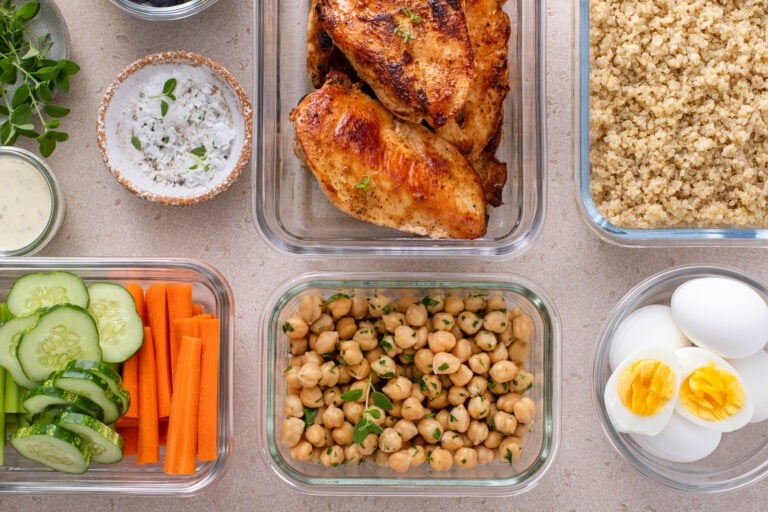
Instead of shopping by recipe, you shop by category, choosing a set number of ingredients across each one that naturally overlap into multiple meals throughout the week. Breakfasts and lunches tend to be meal prepped in small batches, and dinners are either single serve or small batch, built from those same overlapping ingredients so nothing sits unused.
Here’s how the formula breaks down:
- 4 to 5 proteins. This sounds like a lot but it’s really two tiers. Two of your proteins are going to be everyday staples like eggs, egg whites, yogurt, or cottage cheese, things that work for breakfast, snacks, and quick meals. The other two or three are your cooking proteins, something like ground meat (which meal preps really well), plus a chicken, fish, or steak depending on what you feel like that week.
- 3 vegetables. Three gives you enough variety to keep dinners interesting without overbuying. If you like a vegetable in your breakfast meal prep, factor that in here too.
- 2 to 3 carbs. This one is flexible depending on how you eat. I usually reach for a combination of things like rice, potatoes, and pasta… but if sandwiches are part of your week, swap one for bread. Just pick what actually fits your meals.
- 2 fruits. These are mainly for breakfasts and snacks, and they pair really well with your proteins like yogurt or cottage cheese. They can work their way into recipes too, but snacking is a good way to use them!
- 1 sweet treat. This one is non-negotiable in my opinion. You can decide if you want to make it or buy it, having something sweet on hand makes the week feel a little more enjoyable. Or make a small batch of rice krispie treats, grab a chocolate bar, whatever feels like a treat to you.
- 1 savory snack. Think chips, crackers, pretzels… something to reach for when you want something salty and easy. Open to interpretation based on what you like.
The beauty of shopping this way is that you’re not locked into specific recipes before you get to the store.
You’re building a flexible ingredient set that can become a lot of different meals depending on what you feel like cooking. And because the ingredients overlap, nothing gets forgotten in the back of the fridge.
If you want to go deeper on planning your meals before you shop, I have a whole post on meal planning for one. But if you just want to grab and go, the Solo Shopping Formula is your shortcut.
How to Use the Solo Shopping Formula at the Store
Here’s the thing about the Solo Shopping Formula… you don’t need a detailed list to use it. This is the rough, real-world version of grocery shopping for one, and it works even when you’re just winging it.
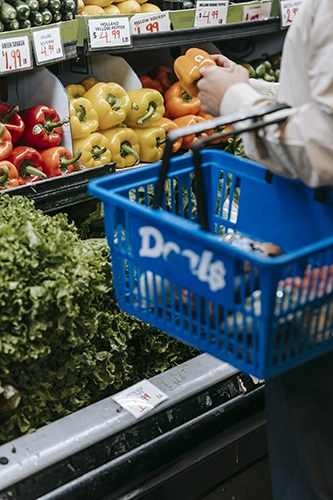
When I get to the store I usually start in produce, and I think that’s actually the right instinct when your cooking for one. Your vegetables and fruits have the shortest shelf life, so they set the tone for everything else. What you pick here is going to influence your proteins, your carbs, and how your week shapes up.
So start there.
Pick your three vegetables first. And as you’re choosing, think about overlap… not just what sounds good, but what can pull double duty across multiple meals. Broccoli works in a stir fry, a grain bowl, and roasted as a side. Peppers go into eggs, into a ground meat dish, into a wrap. Spinach disappears into almost anything.
That’s the question to ask yourself in the produce section: can I use this at least two different ways this week? If the answer is no, put it back.
Once your produce is in the cart, your proteins start to make more sense. If you grabbed green beans, peppers, and broccoli you’re probably thinking stir fry, maybe a sheet pan dinner, something with a little more texture and bite. That points you toward chicken thighs or ground meat.
If you grabbed spinach, zucchini, and cherry tomatoes you might be thinking lighter, maybe pasta, maybe eggs, maybe a grain bowl. Different vegetables, different proteins, different week.
This is how ingredient overlap actually works in practice. You’re not planning five specific recipes… you’re building a flexible set of ingredients that can become a lot of different things depending on what you feel like on any given night.
A few mistakes worth avoiding:
- Overbuying produce. This is the biggest one. Three vegetables really is enough. Four starts to feel ambitious, but possible. Five is how you end up with a bag of spinach slowly liquefying in your crisper drawer.
- Shopping for recipes instead of ingredients. If you’re pulling up a Pinterest recipe in the store and adding everything on the list to your cart, you’re going to end up with ingredients that only work together one way. This is only useful if you plan to meal prep one big recipe. But if you like variety single serve meals are the way to go and you’ll want to shop for ingredients with multiple purposes, not for a specific dish.
- Forgetting to give everything a job. You need less than you think, but everything you buy should have a purpose. If you can’t think of at least two ways you’d use something this week, it doesn’t need to be in your cart.
The goal here isn’t a perfect meal plan.
It’s a cart full of ingredients that make sense together, so when you open your fridge on a Wednesday night you can actually cook something without running back to the store.
Already want to get more structured about this? The meal planning for one post takes this a step further if you want a more intentional approach going into the week.
How to Use the Store to Your Advantage
Find a store that works for your life
Not all grocery stores are created equal when you’re cooking for one.
Trader Joe’s is genuinely one of the better options if you have one nearby… the portions tend to be smaller, the frozen section is excellent, and they carry a lot of pre-seasoned proteins and prepared items that are practically designed for one or two people. If you’re looking for a shortcut week, it’s a great place to start.
Stores like Aldi and Lidl are worth knowing about too, especially if you’re watching your budget. The produce section is limited but solid, and if you go in knowing your formula the limited selection actually makes decisions easier, not harder.
Wegmans and Harris Teeter are great options if you have them nearby and want more variety. These are worth mentioning for two underrated reasons, the bakery and pre-made items. If you want one bagel for a bacon egg and cheese this week, you can buy one bagel. If you only need half a loaf of bread or a fruit cup, they often sell exactly that.
Other grocery stores are starting to carry half loaves too, so it’s worth checking your bakery section wherever you shop. And if you do buy a full loaf, refrigerating or freezing the rest will stretch it through the week without waste. Larger stores like these also tend to have solid deli counters and prepared foods sections, which we’ll get to in a second.
If you shop at a warehouse store like Costco, be selective. A few items make sense to buy in bulk, things like olive oil, canned goods, frozen proteins, and snacks. But buying a five pound bag of spinach because it’s a good deal is how you end up throwing away four pounds of spinach. Buy bulk strategically, not out of habit.
Use the deli counter and prepared foods section
This is one of the most underused shortcuts when you are cooking for one. The deli counter lets you buy exactly what you need, a few slices of turkey, a small amount of cheese, half a pound of something, without committing to a full package. If sandwiches or wraps are part of your week this is worth the extra minute at the counter.
Prepared foods and meal kits are also worth a second look. A salad kit is often more practical than building a salad from scratch when you’re prepping lunch for yourself. Sometimes the pricing can be better too. You might have less waste, and it’s already portioned.
Pre-chopped onions, shredded cabbage, spiralized zucchini… these aren’t lazy, they’re smart. You’re paying a little more for the prep work but you’re saving the ingredient from going to waste because you only needed half of it anyway. Harris Teeter has an awesome deal weekly on pre-chopped and portioned fruit cups that I love to grab when I’m there.
Don’t forget the bakery section
This one is easy to walk past but worth slowing down for. If your store has an in-house bakery, you can often buy individual items instead of committing to a full pack. One bagel instead of six so you can make that breakfast sandwich on Saturday morning. A single ciabatta roll instead of a whole bag is great for a fast lunch or dinner. And, a half loaf of bread instead of a full one can be used for several recipes and meals.
For solo shoppers this is genuinely useful because you may not always want or need a full loaf of bread. If you do buy one, refrigerating or freezing the second half right away is an easy way to make it stretch. And if you end up with a few slices going stale, don’t toss them… stale bread is actually perfect for French toast or a small French toast bake, which is a great way to use it up without waste.
Don’t overlook the freezer section
Frozen gets a bad reputation but it’s genuinely one of the best tools a solo cook has. Frozen vegetables are picked and frozen at peak freshness, and they let you use exactly what you need without watching the rest go bad in your crisper drawer.
Frozen peppers and onions are a particular favorite of mine for things like chili, stir fries, and egg dishes where fresh would work but frozen is just easier.
Frozen proteins are also worth keeping on hand.
Frozen fish fillets that cook from frozen are a great weeknight shortcut (these cook right in the air fryer or oven!) Frozen chicken, comes in great in your cut of choice…breasts, thighs, or something like chicken bites or tenders, will give you a protein backup for nights when you didn’t plan ahead.
For breakfast, the freezer section has gotten really good. Frozen smoothie packs, breakfast sandwiches, and even frozen omelettes are all solid options for mornings when you want something quick without cooking from scratch.
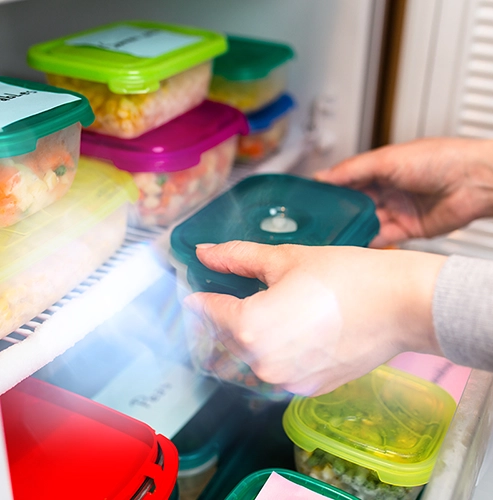
One thing to keep in mind though… don’t overstock your freezer with raw ingredients. It can become a black hole where things go to be forgotten. Be intentional about what goes in there, and if freezer cooking for one interests you as a bigger strategy, I have a whole post on that coming soon!
Lean on canned and shelf stable goods
Canned goods are one of the most practical tools in a solo kitchen and they don’t get enough credit.
Canned beans, tomatoes, coconut milk, tuna, salmon… these are ingredients that last, that work across dozens of recipes, and that fill in the gaps when your fresh ingredients run out mid-week.
Freeze dried or dehydrated ingredients are also worth exploring if you haven’t already. They’re lightweight, shelf stable, and can work really well for things like herbs, fruits, beans, and even some proteins where you just need a small amount.
The key with both frozen and canned is the same as everything else in the Solo Shopping Formula… give it a purpose before it goes in your cart. A can of coconut milk sitting in your pantry for six months isn’t a shortcut, it’s clutter. But a can of coconut milk you bought because you’re making a curry on Thursday? That’s intentional shopping.
For more on building out your pantry backbone, check out my solo pantry post.
Start Shopping Smarter for One
I hope this guide has made grocery shopping for one feel a lot more manageable. If you take one thing away, remember that the goal isn’t to buy less, it’s to buy with intention, so every ingredient in your cart has a purpose and a path to becoming something you actually want to eat.
The best place to start is your next grocery run.
Try the Solo Shopping Formula, pick your produce first, and let the rest of your cart build from there. That one shift alone will change how your week feels in the kitchen.
So what do you say, are you ready to stop watching spinach turn into a science experiment?
Free: The Cooking for One Grocery List
Now that you know how the Solo Shopping Formula works, grab the free grocery list and take it with you to the store.
It’s organized by category so you can fill in what you need each week and head out with a plan.
Download your free copy here.
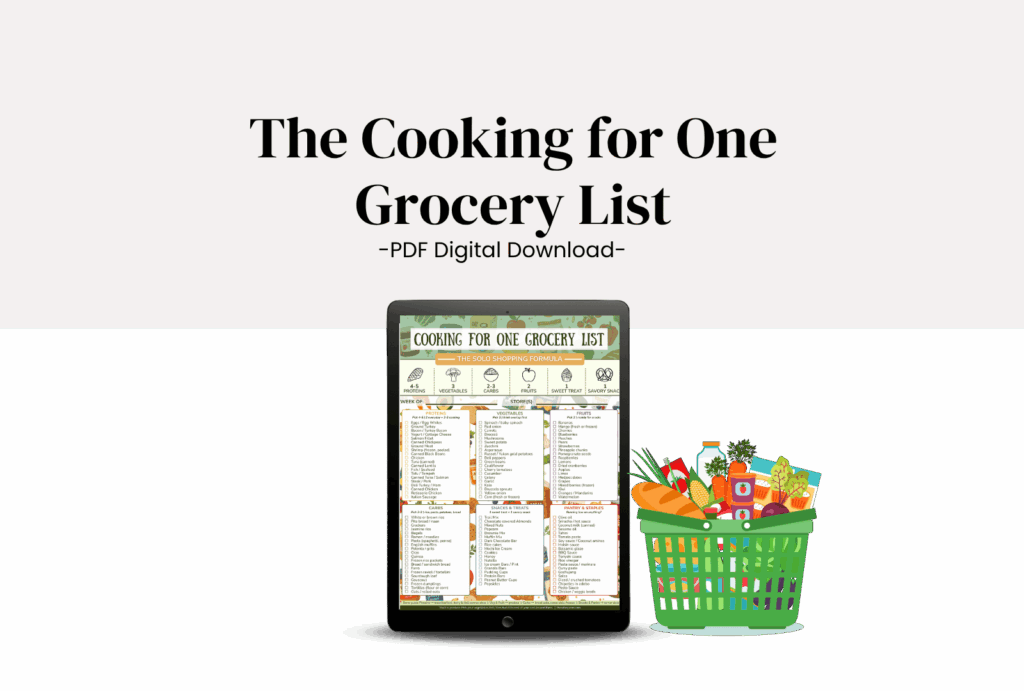
Want an interactive version you can use on your phone at the store? The Cooking for One Google Sheets Grocery List lets you check off items as you shop, track your weekly budget, and plan your ingredient overlap all in once place.
Grab it now it now in the shop!