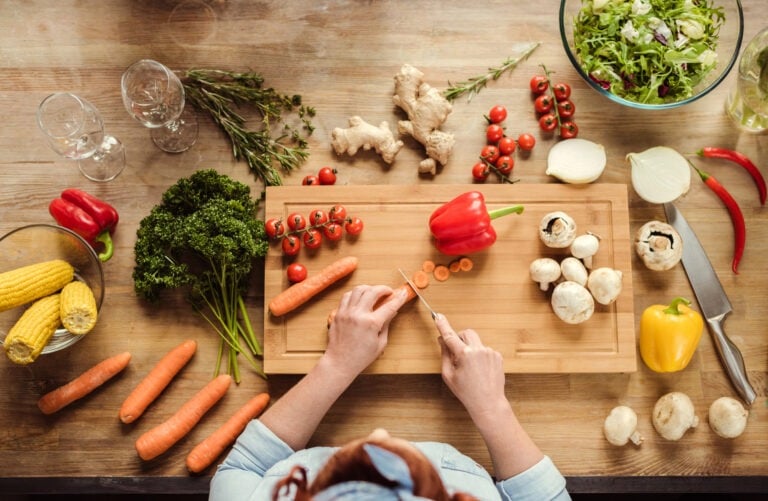

When you first learn to cook, you learn to cook for a family.
Every cookbook, every Pinterest recipe, every TikTok video is geared to feed a group of people. So when you’re cooking for one and you want to make something for yourself, your natural instinct is to do exactly what you were taught… find a recipe, buy all the ingredients on the list, and make it.
And sometimes that works out fine.
But a lot of the time it doesn’t, and the reason why might surprise you.
In this post, I’ll walk you through why shopping to make a “recipe first” leads to so much wasted food when you’re cooking for one, and a better way to fix it.
Why Shopping by Recipe Doesn’t Always Work
Here’s what actually happens when you shop by recipe when cooking for one.
Sometimes it works out fine.
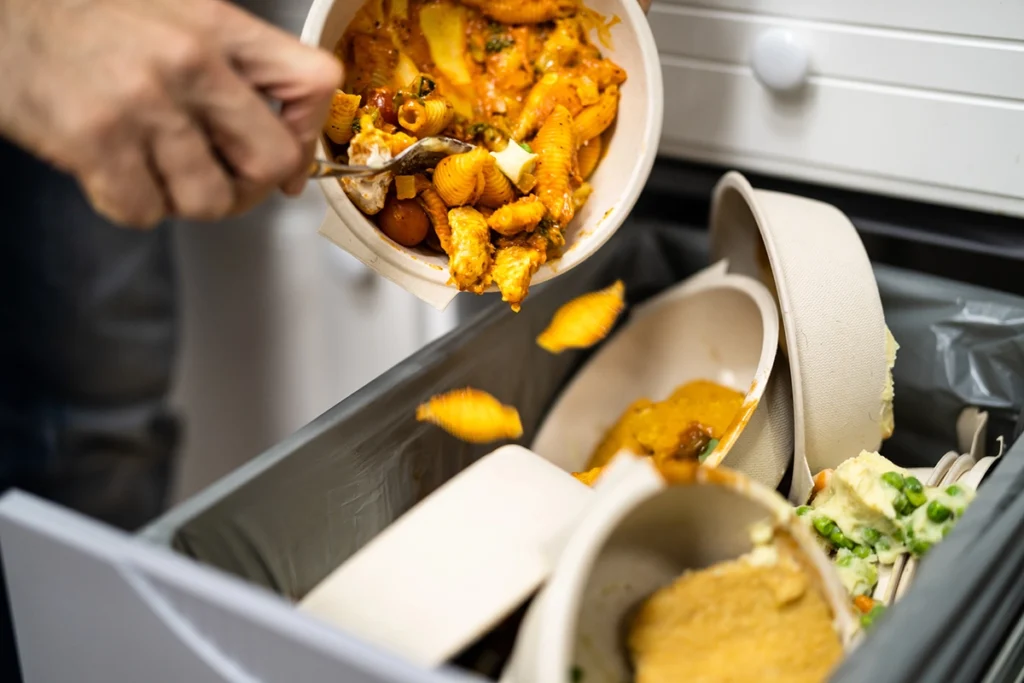
But a lot of the time, one of two things happens. Either the ingredients sit in your fridge with no backup plan and you watch them slowly go bad before you ever get around to using them… or you make the whole recipe, eat it twice, and by day three you’d rather open DoorDash than open the fridge again.
Either way, food goes in the trash and money goes with it.
Here’s the thing though.
That’s not a you problem.
It’s not even a planning problem.
It’s a system problem.
As we’ve all experienced, when you learn to cook, you’re usually taught to cook for a group of people.
Recipes are generally written for families, dinner parties, or meal preps that feed four to eight people. So, every ingredient on that list is sized for a group too.
Your recipe of choice might call for a whole bunch of kale or a full can of coconut milk. Or a whole box of pasta. And when you’re the only one eating, you use what the recipe calls for, and the rest just sits there with nowhere to go. Most times the advice is just to double the recipe for leftovers.
You’re essentially using a cooking framework designed for a family in a one person kitchen.
And that was never going to fit perfectly into your lifestyle.
The good news is once you see it as a system problem, the fix is actually pretty simple.
You just need a different framework, one that was actually built for one.
How To Reduce Food Waste
Step 1: Stop Shopping for Recipes
This small shift actually fixes the waste problem out of the gate.
Instead of finding a recipe and buying what it needs, you flip it.
You pick your ingredients first and let the meals come from them. And before anything goes in your cart, you ask yourself one question… can I use this at least two different ways this week? If the answer is no, put it back.
This is the difference between an ingredient with a job and an ingredient with a death sentence.
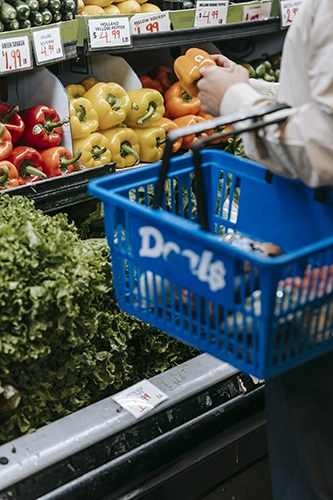
Take bell peppers for example. Under this old system we are all used to you’d buy them for one specific recipe and they sit in your crisper drawer until you throw them out. Or use half of the bell pepper in the recipe.
Under this new system, you’d buy them because you know they go into your egg scramble Monday morning, your stir fry Wednesday night, and your fajita bowl on Friday.
See the difference? Suddenly one ingredient is doing the work of three instead of for a single recipe.
And! The best part? Nothing gets wasted because nothing runs out of purpose.
That’s the whole idea behind ingredient overlap, and it’s the foundation of the Solo Shopping Formula. Every item in your cart should have at least two meals it could become before it ever makes it home.
Related Post: Grocery Shopping for One
Step 2: Give Every Ingredient a Job
Once you start shopping for ingredients instead of recipes, the next thing that makes the biggest difference is being intentional about what role each ingredient plays in your week.
Not a specific recipe.
Just a general sense of how it fits.
Spinach is a good example.
Usually you’d buy a bag of spinach for one salad and you’ll use maybe a third of it… and spend the rest of the week watching it slowly turn into a swamp at the bottom of the bag. But, if you buy spinach because you know it’s going into your eggs on Monday, you plan to wilt it into pasta on Wednesday, and want to throw it into a smoothie on Friday?
Suddenly that same bag disappears by the end of the week with nothing to show for it except a clean crisper drawer.
The question to ask yourself before anything goes in your cart is the same one from Step 1: what are at least two ways I’ll actually use this ingredient this week? If you have to think too hard about it, that’s your answer.
The goal isn’t to plan every meal down to the minute. It’s just to make sure nothing in your cart is a one hit wonder.
Step 3: Work Through What You Have
Even with the best ingredients and the best intentions, things still go to waste when you reach for the wrong thing at the wrong time.
This is where what I call the “use it up hierarchy” comes in.
Here’s how it works: Fresh → cooked → frozen → pantry.
That’s the order.
Use your most perishable ingredients first, the things that have a countdown the moment they come home from the store.
- Cook and store the next tier before it turns.
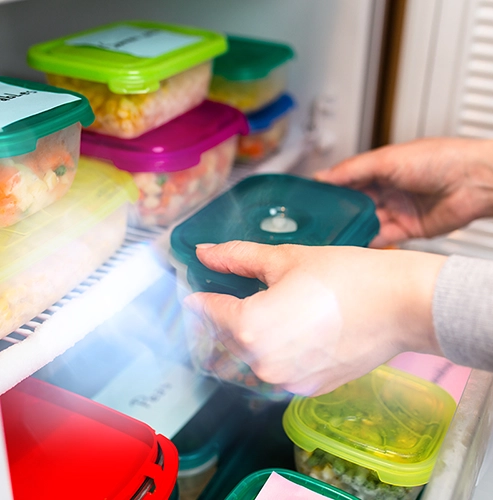
- Lean on your freezer mid-week when the fresh stuff is running low.
- And let your pantry carry you across the finish line on the nights when you haven’t gotten to the store yet.
It sounds simple because it is.
But most people do the opposite without realizing it… they reach for the pasta or the canned beans because it’s easy, and meanwhile the zucchini in the crisper drawer is having a very bad week.
One habit that makes this even easier is doing a quick fridge scan before every grocery run. This takes two minutes.
And you’re just looking for what needs to be used up in the next few days and building your meals around that first before you go buy anything new. Shop to fill the gaps, not to start from scratch.
Do that consistently and you’ll be amazed how much less you throw away… and how much further your grocery budget actually stretches.
A Better Way to Cook for One
Food waste when you’re cooking for one comes down to using a system that was never designed for your kitchen in the first place. And once you make the switch, it really does get easier.
So, try to implement this new new system with your next grocery run.
One trip, and one shift in how you think about what goes in your cart, and your fridge starts looking a lot less like a graveyard by Thursday.
Ready to put it into practice? Grab the FREE Cooking for One Grocery List, it’s built around the ingredient overlap system so you can take this approach with you to the store.
Download your free copy here.
And if you try this method, let us know in the comments how it goes. We’d love to hear what’s working for you.
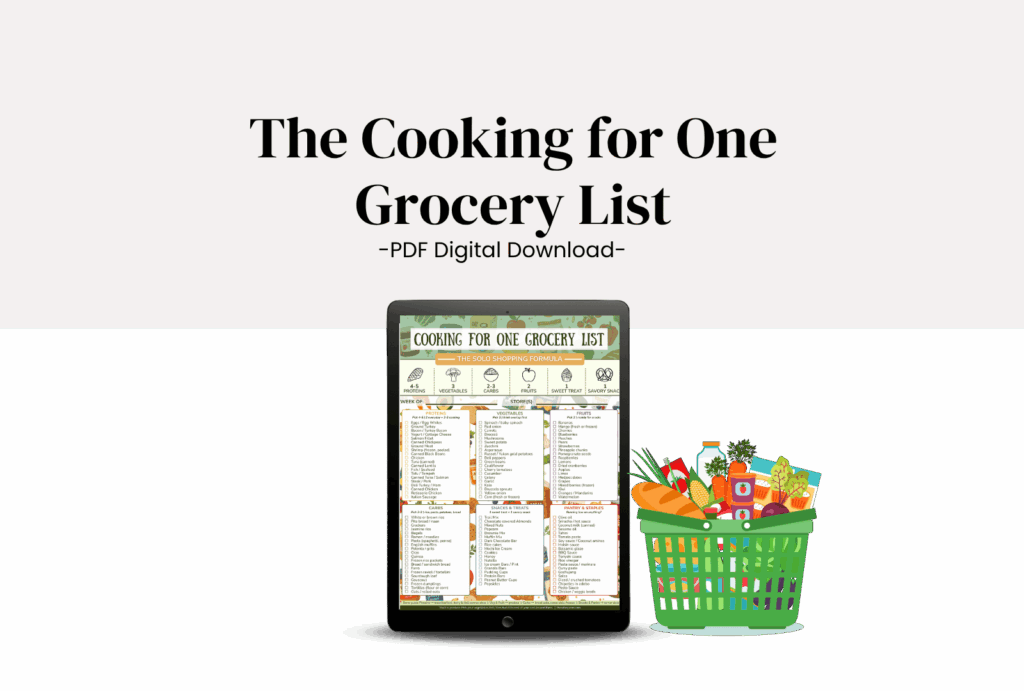
Want an interactive version you can use on your phone at the store? The Cooking for One Google Sheets Grocery List lets you check off items as you shop, track your weekly budget, and plan your ingredient overlap all in once place.
Grab it now it now in the shop!