
Ever get to the end of the week and realize you barely cooked anything you planned? Or worse, didn’t plan at all?
For a lot of people, meal planning for one is actually the hardest version of cooking there is. And that’s because nobody ever really shows you how to do it for yourself.
Luckily, there’s an easy solution!
And that involves getting more organized around cooking for one by having a plan that actually fits your life. And that’s exactly what this guide is for.
In this post, I’ll walk you through a simple step-by-step system for meal planning for one, so you know what to buy, what to make, and how to set yourself up for a week that actually works.

Why Bother Meal Planning When It’s Just You?
A lot of people who live alone tell me “why bother to cook when it’s just me?”
To that I say: because you have to eat! Every single day! Regardless of how busy, tired, or unmotivated you feel (and we all feel it). And just because you cook for yourself doesn’t mean you don’t deserve complete nutritious meals.
But what happens in practice is we usually treat meal planning like an after thought. When there’s no plan in place, that daily reality defaults to whatever is easiest in the moment, which usually means takeout, cereal for dinner, girl dinner, or standing in front of the fridge eating whatever you find and calling it a meal.
We have to change our mindsets though! Because meal planning for one is worth doing for a lot of reasons and they look different depending on where you are in life right now.
- Maybe you’re on a health journey and you want to be more intentional about what you’re eating
- Maybe you want to rack your meals or hit certain nutrition goals
- Or just feel better about what’s going in your body.
Having a plan makes that infinitely easier than trying to figure it out on the fly every day.
Maybe your week is so packed that if you don’t plan ahead you genuinely forget to eat.
A lot of people who live alone, especially busy professionals, go hours without eating simply because there was nothing ready and no plan to fall back on. Meal planning solves that.
Maybe you’re trying to spend less on food and stop watching groceries go to waste.
A plan means you buy what you need and actually use it.
Or maybe you just want to feel more at home in your own kitchen. Cooking for yourself is one of the most fundamental ways to take care of yourself and it’s worth the effort, even when it’s just you at the table.
Whatever your reason, having a loose plan for the week makes everything easier. And that’s exactly what this guide is going to help you build.
Why Meal Planning for One Is Different
When you’re cooking for yourself, every decision lands on you. You have to worry about:
- What to make
- How much to buy
- When to cook
- What to do with the leftovers
There’s no splitting a meal with someone else or defaulting to whatever the family wants that night.
And, that’s actually a good thing. You have complete flexibility. But flexibility without a system can feel a lot like standing in the kitchen at 6pm with nothing planned and no idea where to start.
The other thing that makes meal planning for one unique is that no two people in this situation are starting from the same place. Some people are new to living alone for the first time.
Some are cooking for themselves after years of cooking for others. Some are busy professionals grabbing meals between long days. Some are retired and finally cooking exactly what they want.
The system doesn’t change much between those situations but the way you apply it does.
So, how can you meal plan for one? Here are the steps you need to take.
Step 1: Look at Your Week First
Before you think about food, open your calendar.
This is the step most people skip and it’s the reason most meal plans fall apart by Tuesday.
You plan five lunches and dinners, buy groceries for five dinners, and then remember you have a work lunch on Wednesday, dinner with a friend on Thursday, and you’re traveling Friday through Sunday. Now you have three unplanned meals and a fridge full of food that needs to be used up before you leave.
Instead, look at your week first. Mark off any meals you won’t be eating at home. Work lunches, dinners out, social plans, travel days, anything where you’re not going to be cooking for yourself. Those days might need a plan and but they likely don’t need groceries.
What’s left after you mark those off is what you actually need to cook for. And that number is almost always smaller than you think.
This one step alone will reduce how much you buy, how much you waste, and how much pressure you feel to cook every single night. You’re not planning for a perfect week. You’re planning for your actual week.
Step 2: Audit What You Already Have
Before you write a single thing on your grocery list, shop your kitchen first.
Open your fridge, your freezer, and your pantry and take stock of what’s actually in there.
This sounds obvious but most people skip it and end up buying duplicates of things they already have or letting perfectly good ingredients go to waste because they forgot they were there (guilty!).
Start with your fridge. What needs to be used up in the next two or three days? Those ingredients become the first meals of your week. Build around what’s about to expire before you think about buying anything new.
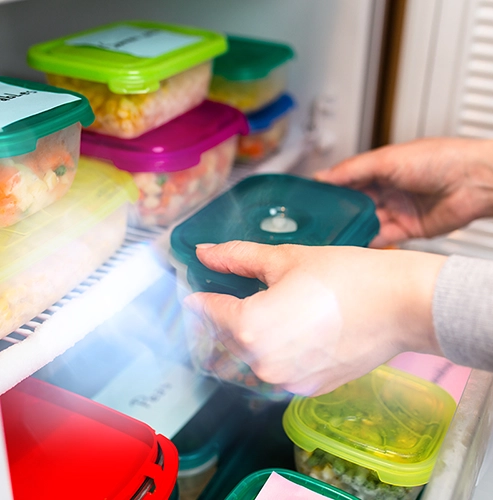
Then check your freezer. There’s a good chance you have proteins, grains, or frozen vegetables in there that have been waiting for a plan. This is their moment. Pull something out and build a meal around it.
Finally scan your pantry. What staples are running low? What do you have enough of to carry you through the week without buying more? A well stocked pantry means your weekly grocery list is almost always shorter than you think.
The goal of this step to make a plan to shop to fill the gaps, not to start from scratch every single week. Most of the time you already have more to work with than you realize.
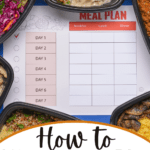
To make this easier, I put together a free Cooking for One Weekly Meal Planner so you can map out your week before you head to the store. It’s a simple two page template with a few trackers that helps you see your whole week at a glance so nothing gets forgotten and nothing goes to waste.
→ Download your free weekly meal planner and trackers bundle here.
And if you want to take it a step further, the Cooking for One Meal Planning Kit includes the full planning system, meal ideas by category, a grocery list, and the interactive Google Sheets planner so everything lives in one place.
→ Get the Cooking for One Meal Planning Kit here.
→ Related Post: Grocery Shopping for One
→ Related Post: Stocking a Pantry for One
Step 3: Decide What Kind of Week It Is
Not every week looks the same and your meal plan shouldn’t either.
Before you start filling in meals, take an honest look at what kind of week you’re walking into.
Are you slammed at work with back to back days and no energy to cook by 6pm? Or do you have a slower week with time to actually enjoy being in the kitchen?
This matters more than we care to admit.
A busy week calls for a different plan than a slow one. If you know you’re going to be tired, plan for it. That means more grab and go breakfasts, lunches you prep ahead of time, and dinners that come together in thirty minutes or less.
Trying to cook an elaborate meal on a Wednesday night after a ten hour day or working a night shift is how meal plans fall apart.
A slower week is when you try something new, spend a little more time in the kitchen, or do a bigger prep session that sets you up for the busy week coming after it.
There’s also the in between week where some days are busy and some aren’t. For those weeks mix it up. Plan two or three quick dinners for the hectic nights and one or two more involved meals for when you actually have the time and energy.
And then there’s the week where you just don’t want to cook at all. That’s okay too. Meal planning for one doesn’t have to mean cooking every single meal yourself. A meal delivery service like Factor, Mighty Meals, or a similar option in your area can be a genuinely smart part of your weekly plan.
These services deliver fully prepped, ready to heat meals so you always have something in the fridge you’re actually excited to eat, even on the nights where cooking feels like the last thing you want to do. Factor them into your plan intentionally rather than reaching for them out of desperation and they become a tool instead of a guilty fallback.
The point is to plan for the week you’re actually having, not the idealized version where you cook a beautiful meal every single night. That version doesn’t exist and planning for it is how food goes to waste.
Step 4: Plan Your Meals Loosely
Now that you know what kind of week you’re having you have to determine: what’s in your kitchen, and which meals you’re not cooking, it’s time to actually plan.
And the key word here is loosely.
A meal plan isn’t a contract.
Just because you write oatmeal down for Tuesday doesn’t mean you have to eat oatmeal on Tuesday. Think of it more like a menu for the week. You know you have oatmeal, eggs, a smoothie, and pancakes available for breakfast this week. Which one you reach for on any given morning is completely up to you. The plan just makes sure the ingredients are there when you want them.
That said, how rigid or loose your plan is really depends on how you like to eat. Some people cooking for one genuinely don’t mind eating the same breakfast every single day and for them a more structured plan works great. Others want variety and flexibility built in from the start. Neither is wrong. The best meal plan is the one you’ll actually follow.
Here’s how to think through each meal type:
Breakfasts are where meal prep pays off the most. Pick one or two breakfast options for the week and either prep them ahead or keep the ingredients simple enough that it takes five minutes in the morning. Overnight oats, egg muffins, yogurt parfaits, smoothie ingredients pre-portioned in bags. When you’re cooking for one to not get bored you need variety at breakfast but you also need reliability. Focus on your favorite 7-10 breakfasts to start and rotate them.
Lunches work similarly. If you’re heading into an office or working long days, prepping your lunches ahead saves you time and money. Pick two or three lunch ideas and make enough for three to four days. Something that holds well and travels easily.
Dinners are where variety matters most. Pick three to four dinner ideas for the week to start. You’re giving yourself options, not assignments. Three to four solid dinner ideas gives you enough to work with without overcommitting.
Snacks are the most overlooked part of meal planning for one. Having snacks you actually want on hand prevents the 3pm spiral of eating whatever is within reach. Pick two or three options and make sure they’re accessible.
The whole planning process shouldn’t take more than ten minutes. You don’t have to build a rigid schedule, you’re just giving your week a loose shape so decisions feel easier when you’re tired and hungry.
And if you haven’t already, this is a good time to grab the free Cooking for One Weekly Meal Planner to write it all down. It’s a simple two page template that makes the whole process visual and easy to follow.
→ Download your free weekly meal planner here.
→ Related Post: Grocery Shopping for One
Step 5: Build Your List From the Plan
Now that you know what you’re eating this week, building your grocery list should be straightforward.
Go through each meal you planned and write down what you need. But before anything goes on the list, check it against what you already found in Step 2. If you already have rice in the pantry, it doesn’t go on the list. If you have half a bag of spinach in the fridge, build a meal around that before you buy more.
You’re shopping to fill the gaps, not to restock everything from scratch (unless you need to do a pantry clean-out and start over!)
A few things to keep in mind as you build your list:
Buy for the meals you actually planned. Not the meals you might make if you feel inspired mid-week. Not the ingredients that look good in the store. The ones you wrote down in Step 4.
Think in quantities that make sense for one. This is where a lot of people cooking for one overspend. You don’t need a full bunch of every herb or the family sized bag of every vegetable. Buy what you’ll actually use this week and refer back to the Solo Shopping Formula as your guide for how much of each category you actually need.
Keep a running list between shops. As you run out of pantry staples during the week, note them down so your next grocery run is faster. This is how shopping for one gets more efficient over time, you stop starting from scratch every week and start maintaining a system.
Once your list is built, you’re ready to shop. And if you want a ready made template to take with you to the store, the free Cooking for One Grocery List is organized by category and built around exactly this process.
→ Grab your free Cooking for One Grocery List here.
→ Grab your Interactive Cooking for One Grocery List here.
→ Related Post: Grocery Shopping for One
Find Your Cooking Style
Once you have your plan and your grocery list, the last piece is figuring out how you actually want to cook for the week.
There’s no one right answer here because it really depends on your lifestyle, your schedule, and honestly just how you like to spend your time in the kitchen.
Single Serve
This is exactly what it sounds like. You cook one portion at a time, usually for dinner, right when you’re ready to eat it. There’s not a lot of prepping ahead involved, just your meal plan for each day and then you cook what you want when you want it.
This works really well for dinners when variety matters most and you don’t want to eat the same thing two nights in a row. It’s also the most flexible approach because nothing is committed until you actually start cooking. The best way to cook single serving meals is to overlap your ingredients.
The downside is that it requires the most daily decision making and time. If you’ve had a long day and don’t have the energy to cook from scratch, single serve can feel like too much.
Batch Cooking
Batch cooking is slightly different from meal prep. Instead of making complete meals ahead of time, you cook larger quantities of individual components that you can mix and match throughout the week.
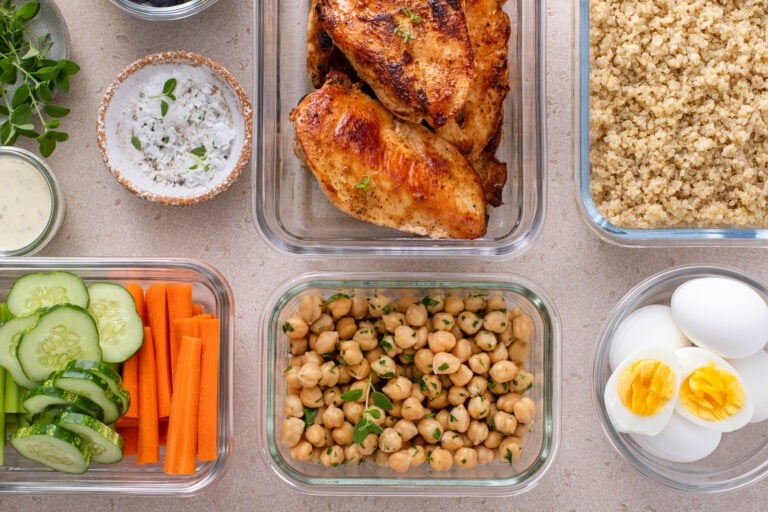
For example, you might roast a big tray of vegetables on Sunday, cook a pot of rice, and season a batch of ground meat. None of those are complete meals on their own but they become the building blocks for grain bowls, stir fries, wraps, and quick dinners all week long. Think of it like ingrident prep for your meals but in batch form.
The way to plan for this method is to make sure that your ingredients overlap, the meals feel different every night, and you’re not eating the same thing on repeat.
This is actually the approach that works best for many people cooking for one because it gives you the efficiency of prep without the monotony of eating identical meals.
Meal Prep
This is the type you are likely the most familar with that you see all over social media.
Full meal prep means cooking and portioning complete meals ahead of time so they’re ready to grab and go. This is the most structured approach and it works best for breakfasts and lunches where you want something reliable and fast without having to think about it. Or if you truly will not have time to prep anything before you leave your home and need a grab and go option.
We have a whole meal prep section on the blog if this is your meal planning type. Think of meals like chia pudding, make-ahead breakfast sandwiches, overnight oats portioned into mason jars, egg muffins made in a batch of six, or a grain salad that holds well for four days. These aren’t glamorous but they solve the problem of weekday mornings and busy lunch hours without any daily effort.
The key when you’re cooking for one is not to over prep. Prepping five identical dinners might work for some people if you don’t mind eating the same thing daily, but for most people it leads to meal fatigue by Wednesday. Use meal prep strategically for the meals where convenience matters most and leave room for flexibility everywhere else.
The Flexible Approach
For a lot of those of us cooking for ourselves, the best system is not committing to one system at all.
Maybe you meal prep your breakfasts because mornings are hectic, batch cook a few components for dinners during the week, and leave the weekends completely open for cooking whatever sounds good in the moment. Or maybe one week you’re fully prepped and organized and the next week you’re using a meal delivery service on Tuesday and scrambling eggs for dinner on Thursday and that’s completely fine.
The flexible approach is really just permission to use whatever combination of these styles fits your week. Some weeks call for more structure. Some weeks call for less.
The goal was never to follow a perfect system, it was to make sure you have food you actually want to eat without spending more time and money than you need to.
That’s what meal planning for one really comes down to.
Start Planning Your Week
You made it to the end! I get it, meal planning can be time consuming and sometimes not worth the trouble. I feel like that a lot. But it can also bring structure and sanity to crazy busy weeks. And if you use the methods from this guide, it can feel a little less intimidating and fit your actual life.
Start with your calendar, audit what you already have, figure out what kind of week you’re walking into, and build a loose plan from there. Done beats perfect every time!
And remember, your meal plan exists to make your life easier, not to lock you into something too rigid.
This is YOUR meal plan!
So, make it work for your life. That can mean ordering delivery on Thursday when you’re exhausted, but also knowing that you have meals planned for the rest of the week for breakfast, lunch, and dinner. That’s what meal planning is all about, working with a plan that actually works for your lifestyle.
Be sure to grab the free Cooking for One Weekly Meal Planner below and use it to map out your week. It’s a two page planner with a few trackers that takes about ten minutes to fill in and makes the whole process a lot more manageable.
→ Download your free weekly meal planner here.
Also grab the Cooking for One Meal Planning Kit is a full resource on meal planning with a 500 meal ideas database across breakfast, lunch, dinner and snacks, an interactive Google Sheets planner, and everything you need to plan, shop, and cook for one all in one place.
→ Get the Cooking for One Meal Planning Kit here.