
Kimbap is one of my favorite no cook lunches and it’s so much easier to make than people think. This spicy tuna version comes together in about 15 minutes with mostly pantry ingredients. The hardest part is waiting for the rice to cool.
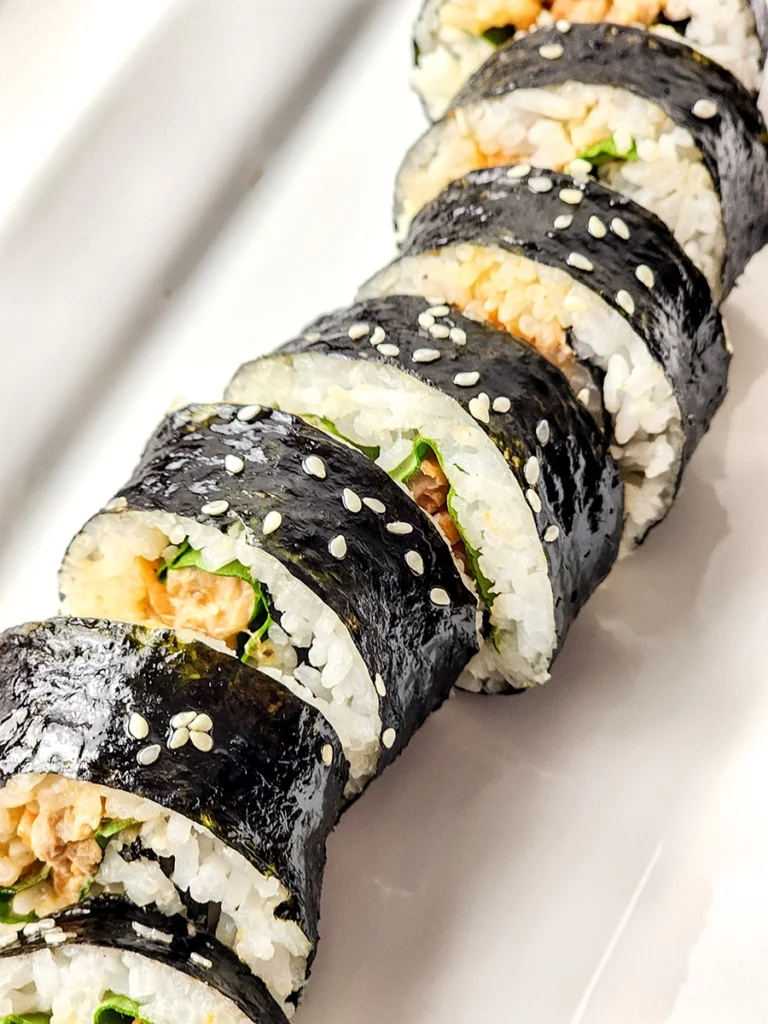
What Is Kimbap?
Kimbap is a Korean dish made of seasoned rice and fillings rolled in dried seaweed and cut into bite-sized pieces. Growing up near a lot of Korean restaurants, it was always one of my go-to orders. And once I figured out how easy it is to make at home, I never looked back.
It’s often compared to sushi but they’re pretty different. Kimbap uses plain or lightly salted rice rather than vinegared rice, and the fillings are typically cooked or shelf-stable rather than raw fish. It’s also a common Korean street food and lunchbox staple, which is exactly the energy this recipe is going for.
Recipe Highlights
- No cooking required: just microwave the rice and you’re basically done
- Ready in 15 minutes start to finish!
- Made almost entirely from pantry staples, just add fresh spinach and carrots (or leave them out)
- Single serving with no leftovers to worry about!
- Fun to make and even more fun to eat
- High protein (about 30 grams) and great for lunch or a snack
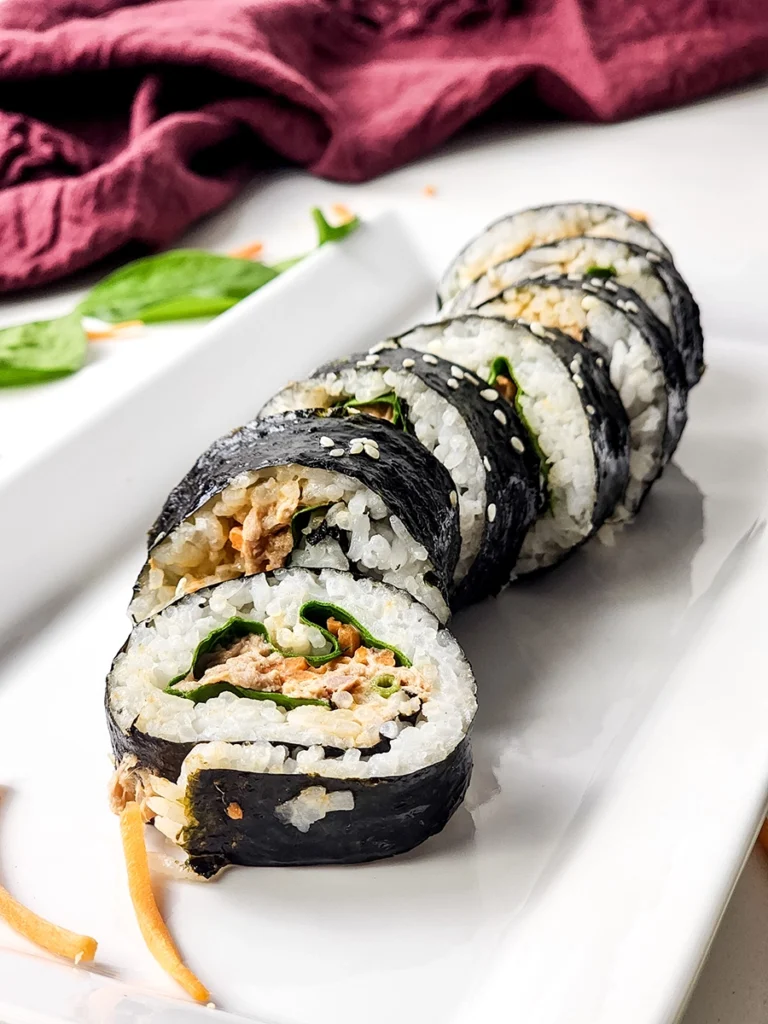
Ingredients You’ll Need
Most of this recipe is probably already in your pantry. You’ll need: canned tuna, sriracha, Everything But the Bagel seasoning, and sesame oil. The few items worth calling out:
Rice: A microwavable short or medium-grain white rice keeps this no cook and easy. The Nishiki steamed rice brand is the one I use.
Nori: Full-size roasted seaweed sheets, not snack packs. Find them on Amazon or at any Asian grocery store.
Kewpie Mayo: A Japanese mayo that’s richer and tangier than regular mayo. Trust me, its worth tracking down for the depth of flavor it adds to the filling.
Step-by-Step Instructions
Follow these step by step visual instructions to make this spicy tuna kimbap recipe.
Step 1: Microwave the rice and drain your tuna
Heat your rice pouch according to package directions, then open and fluff. Set aside to cool for a few minutes before using. Drain your canned tuna.
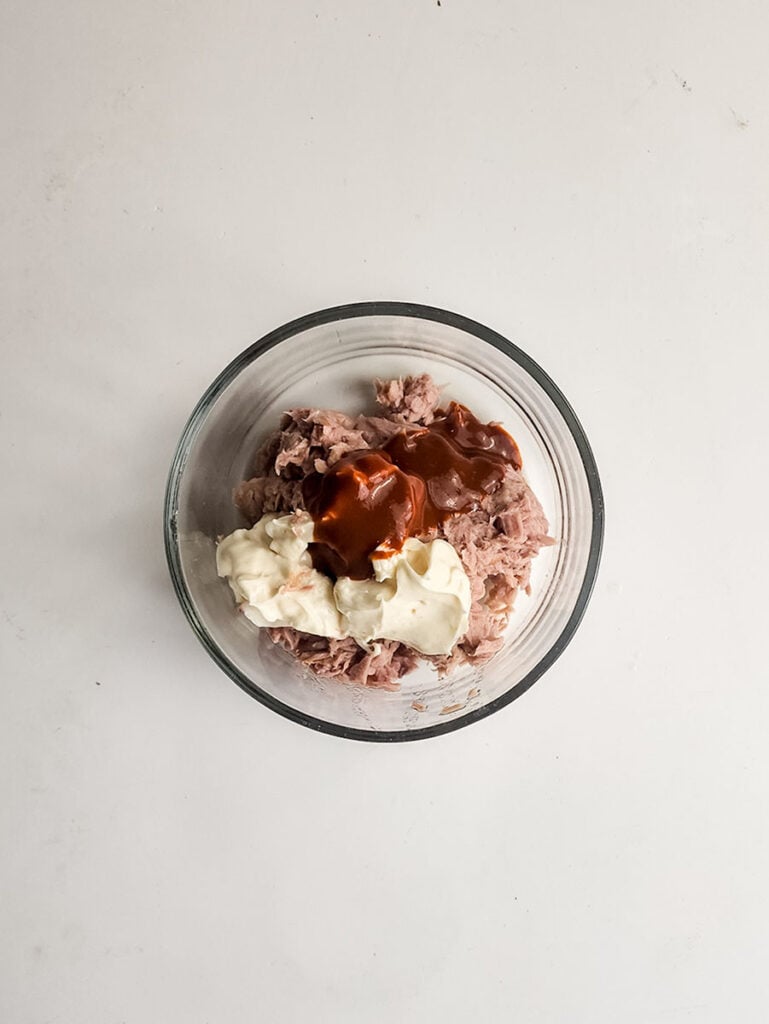
Step 2: Make the spicy tuna
In a bowl, add the drained tuna. To the bowl, add two squirts of Kewpie mayo, one squirt of sriracha, the sesame oil, and a sprinkle of Everything But the Bagel seasoning around the bowl. Stir until well combined.
Step 3: Make the kimbap roll
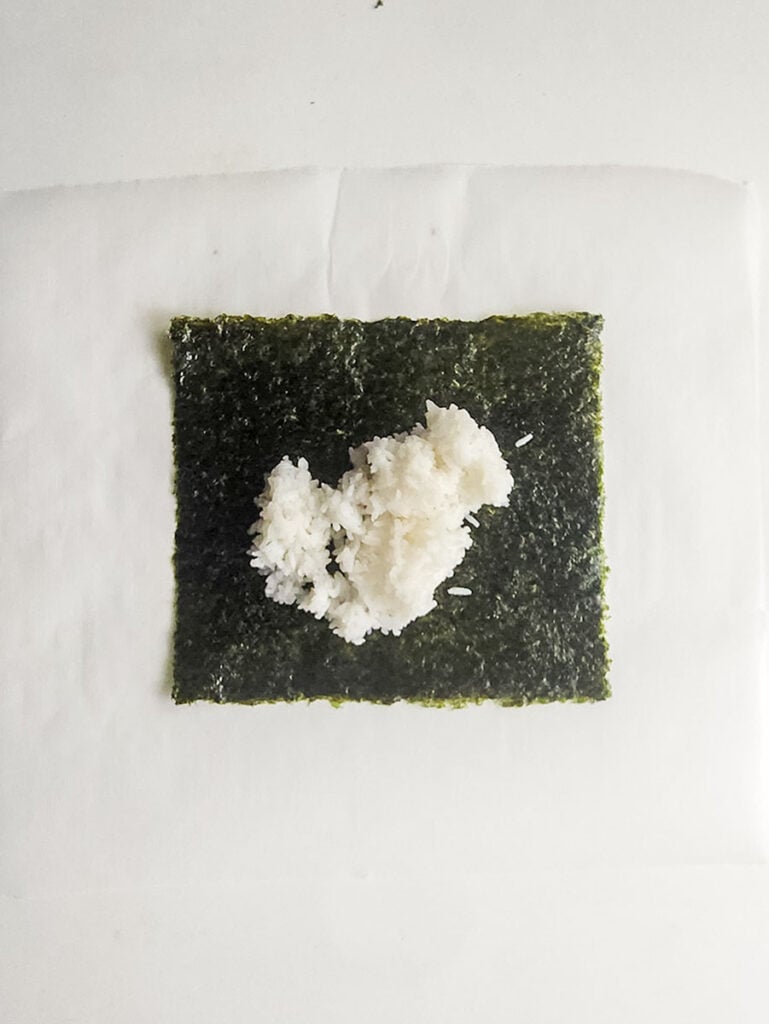
Lay a sheet of parchment paper on a flat surface and place your nori sheet on top, shiny side down. Spread a thin layer of rice over the nori (about 1/2 cup), leaving about an inch at the top.
Step 4: Layer the fillings
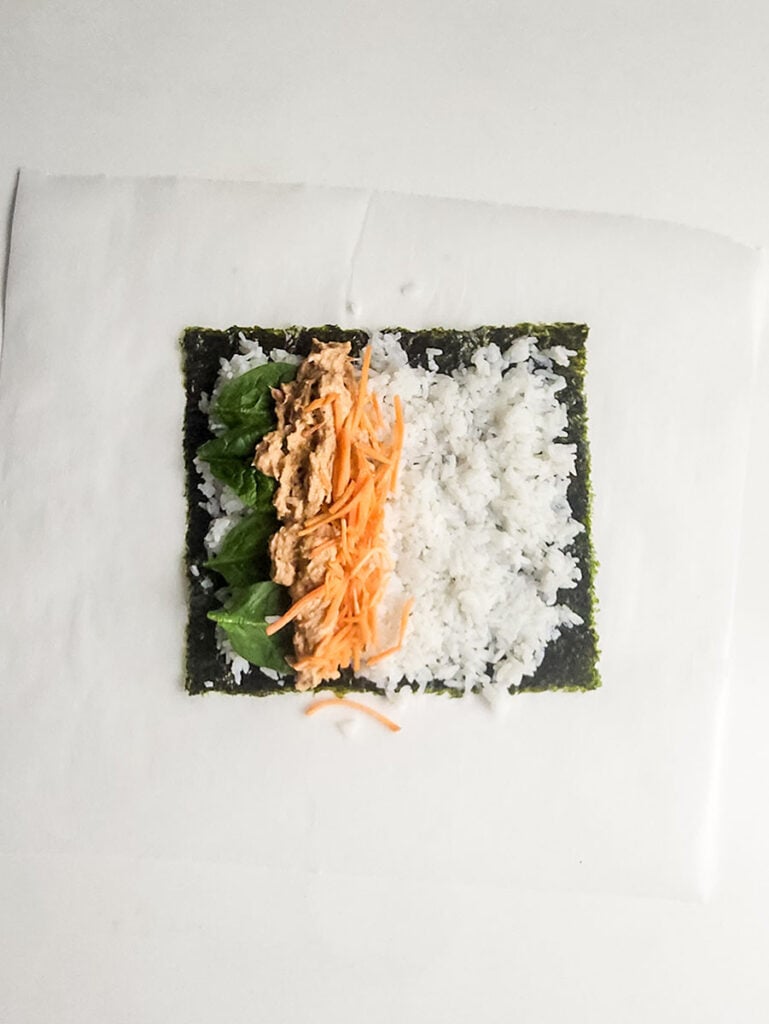
Arrange the spinach and carrots horizontally across the center, then spoon the spicy tuna on top.
Step 5: Roll it up
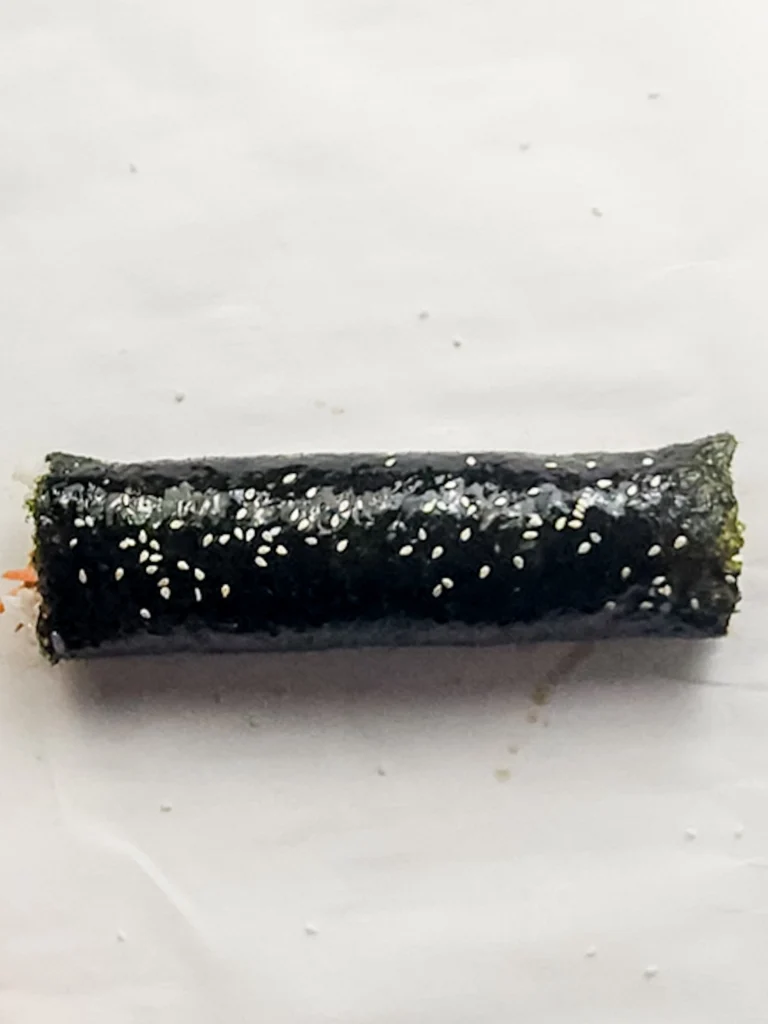
Starting from the bottom, use the parchment paper to roll the nori tightly upward. Seal the top edge with a tiny dab of water or a few grains of rice.
Step 6: Slice and eat
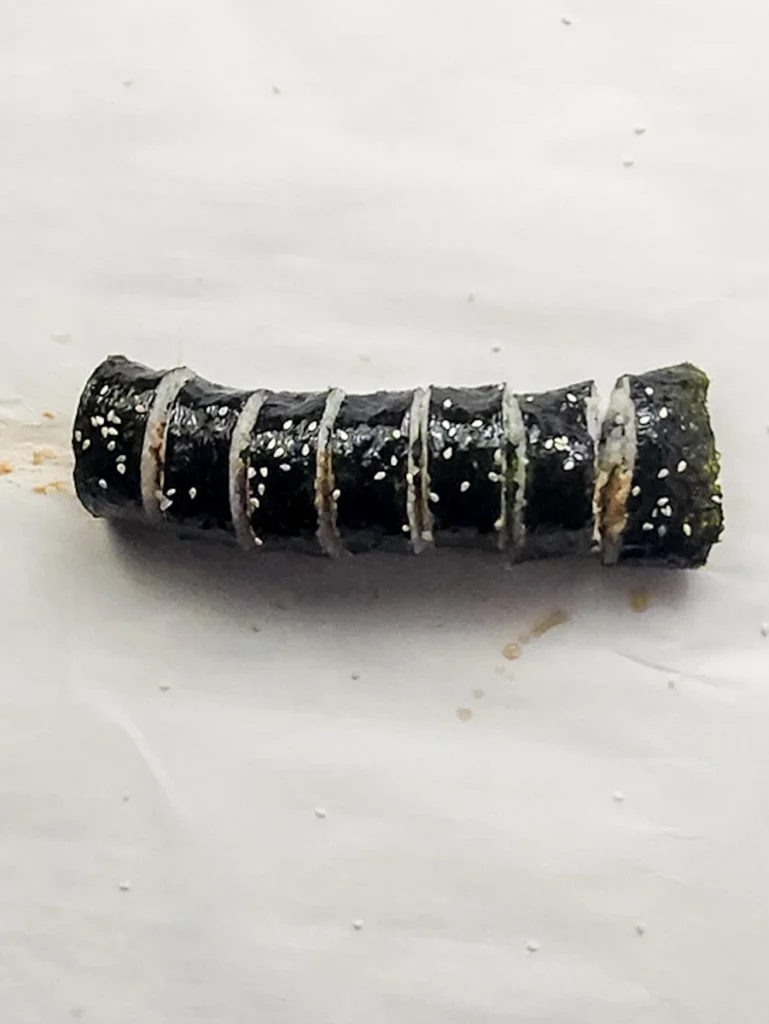
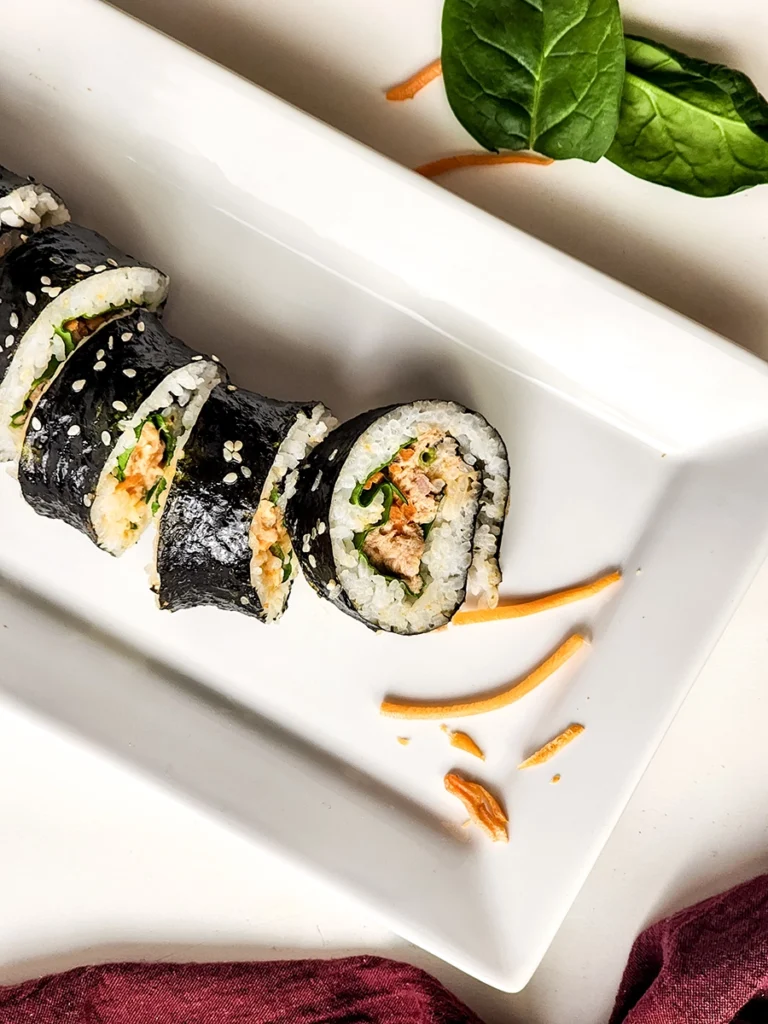
Using a sharp knife, cut into 6-8 pieces, wiping the blade clean between each cut. Add a bit of Sesame oil to the outside of the roll and sprinkle with sesame seeds and eat immediately.
Find the measurements and full recipe below in the recipe card!
Frequently Asked Questions (FAQs)
What is the difference between kimbap and sushi?
Kimbap and sushi look similar but are pretty different. Kimbap uses plain or lightly salted rice instead of vinegared rice, and the fillings are cooked or shelf-stable rather than raw fish. Kimbap is also a Korean staple while sushi is Japanese.
Do you need to microwave the tuna?
No. Canned tuna is already fully cooked. If you want to head it for temperature you can but it’s not a necessary step in the recipe.
Where do I find nori sheets?
Any Asian grocery store will carry them, and they’re easy to find on Amazon too. Just make sure you’re grabbing full-size sheets, not snack packs.
Can I use regular mayo instead of Kewpie?
You can, but Kewpie is worth the extra step. It’s richer and tangier and makes a noticeable difference in the filling. If you are using regular mayo I would go with Dukes.
Can I make kimbap ahead of time?
Kimbap is best eaten fresh. If you need to prep ahead, roll but don’t slice, wrap tightly in plastic wrap and refrigerate for up to a day.
Can I use a different protein?
Absolutely. Canned salmon works great, and canned crab meat can work as a kimbap filling. Keep it shelf-stable to maintain the no cook aspect.
How do you pronounce kimbap?
Kimbap is pronounced “kim-bahp”. The “bap” rhymes with “pop.” You might also hear it called “gimbap” which is the more modern but they’re the same thing.
What is the history of kimbap?
Kimbap has been a staple in Korean cuisine for centuries, traditionally eaten as a portable meal for picnics, travel, and school lunches. While it looks similar to Japanese sushi rolls, kimbap developed independently in Korea and has its own distinct flavor profile and filling traditions. Today, it’s one of the most popular street foods in Korea and a go-to home cooking staple.
PrintSingle Serving Spicy Tuna Kimbap
A Korean-inspired spicy tuna kimbap recipe that comes together in just 15 minutes with mostly pantry ingredients. Spicy, savory, and so much easier to make than it looks.
- Prep Time: 15
- Total Time: 15 minutes
- Yield: 1 roll
- Category: Lunch
- Method: No Cook
- Cuisine: Korean
Ingredients
Spicy Tuna
- 1 can (5 oz) tuna, drained
- 2 squirts Kewpie Japanese mayonnaise
- 1 squirt Huy Fong sriracha
- 1 teaspoon sesame oil
- A sprinkle of Everything But the Bagel seasoning
Kimbap
- 1 container Nishiki Steamed White Rice (7.4 oz), microwaved and cooled — you’ll use about half (1/2 cup)
- 1 full-size nori (roasted seaweed) sheet
- Small handful of fresh spinach leaves
- Small handful of shredded carrots
Topping
- Sesame oil
- Sesame seeds
Instructions
- Microwave the rice container according to package directions. Open and fluff, then set aside to cool for a few minutes.
- Add the drained tuna to a bowl.
- Add two squirts of Kewpie mayo, one squirt of sriracha, the sesame oil, and a sprinkle of Everything But the Bagel seasoning around the bowl. Stir until well combined.
- Lay a sheet of parchment paper on a flat surface and place the nori sheet on top, shiny side down.
- Spread about half the rice in a thin, even layer over the nori (about 1/2 a cup), leaving about 1 inch at the top for sealing.
- Arrange the spinach and carrots horizontally across the center, then spoon the spicy tuna on top.
- Starting from the bottom, use the parchment paper to roll the nori tightly upward. Seal the top edge with a tiny dab of water.
- Using a sharp knife, cut into 6-8 pieces, wiping the blade clean between each cut. Add some sesame oil to the outside of the roll and sprinkle with sesame seeds and eat immediately.